How My Portfolio is Positioned

Over the past few weeks, I've had several friends and family members reach out for some general guidance on how to invest and allocate their savings in today's environment.
A bit of background on my approach: I've never used a financial advisor and have managed my own investments for the past ten years. Most advisors don't share my macroeconomic or risk management views. Some earn commissions on the products they sell, and many still default to the conventional 60/40 stock-bond portfolio. I also find that many advisors and fund managers are incentivized to stay close to consensus for career protection, which often results in everyone crowding into the same large-cap names, particularly the Magnificent Seven.
Personally, I don't have much interest in bonds. After inflation, the real return is often minimal, and your capital is frequently tied up for months. Instead, I rely on a combination of paid and free research from analysts, newsletters, blogs, investment forums, and experienced investors, while ultimately making my own decisions.
Diversification by itself does not eliminate risk. There is a concept called diworsification, where spreading money across too many investments simply makes it difficult to understand what is actually driving your returns. I generally prefer owning fewer than ten investments at any given time. If I'm not comfortable allocating at least 10% of my portfolio to an idea, I probably shouldn't own it at all.
My overall philosophy is value investing, similar to the approach used by investors like Buffett, Druckenmiller, and Grantham. At its core, it's simply buying quality assets below their intrinsic value and having the patience to wait for the market to recognize that value. It's also how many of us naturally think in everyday life. The same reasoning is why buying real estate and gold when they were out of favor in the past, turned out to be good decisions.
One advantage of value investing is that when a position moves against you, there are usually only two possibilities: either your original thesis was wrong and you should close the position, take a small loss and move on, or the market is mispricing the asset and it's an opportunity to improve your average cost. The biggest drawback is time. Price and value can remain disconnected for years, requiring patience and the willingness to wait while the market catches up.
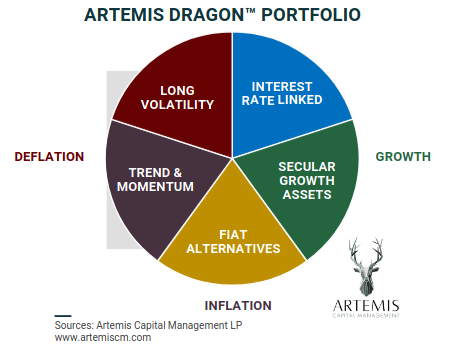
If someone wants a true blanaced all-weather portfolio, the Dragon Portfolio is a solid framework. Personally, however, I prefer adjusting allocations based on where we are in the economic cycle. My view is that we've been in a stagflationary environment that is set to continue, with inflation and interest rates staying elevated. In that type of environment, commodities, energy, precious metals, income-producing assets, and defensive sectors tend to perform better than long-duration growth stocks.
I naturally gravitate toward commodities, particularly mining and energy. Part of the reason is that technology and the Magnificent Seven have become extremely expensive after years of massive capital inflows and investment. Many large mining and energy companies have already appreciated four or five times over the past couple of years, making obvious bargains harder to find. I believe better opportunities now exist among well-run small-cap and micro-cap producers, where I spend most of my time looking.
The Gold:Oil Ratio is one of the main reference points I use to guide my investment allocations. It has been signalling for a few years now that energy is relatively undervalued against gold and most other asset classes generally. This is supported by general anti-thesis and the war on carbon that the global energy sector has suffered from, resulting in chronic under-investment in nuclear and conventional energy over the past 10 years. Meanwhile, demand for oil and natural gas continues to grow across regions like Southeast Asia and parts of Europe. One advantage of investing through the Canadian markets is that Canada, alongside Australia, is one of the world's primary listing centers for mining and resource companies. That allows Canadian investors to gain exposure to commodity producers operating all over the world.
For investors seeking lower-risk exposure, energy ETFs make a lot of sense. I think URNM offers reasonable exposure to uranium producers. IXC provides diversified exposure to global energy companies, while XLE remains one of the largest and most liquid energy ETFs available. For those specifically seeking dividend income, XLE and AMLP are worth considering.
Beyond ETFs, investing becomes much more company-specific, which increases both the potential upside and downside risk and also the volatility. Personally, I prefer stock picking because ETFs are ultimately collections of publicly traded companies. Stock picking requires considerably more research, patience, and risk tolerance, but I believe it can also produce better long-term results. At the moment, CEQ.V and HMR.V remain one among my favorite small-cap investments.
I also don't mind holding U.S. dollars while waiting for better opportunities. Many mining and energy stocks have appreciated significantly over the past 18 months, so there is nothing wrong with being patient and holding cash, or even short-term U.S. Treasuries, where yields remain somewhat higher than comparable Canadian bonds.
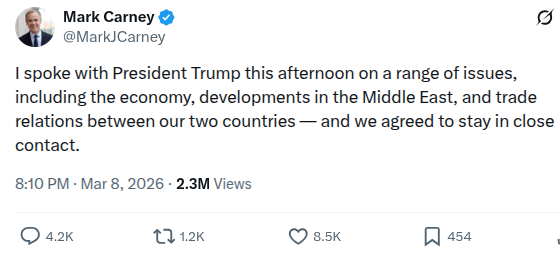
My expectation is that the Canadian dollar will weaken further against the U.S. dollar over the coming year. I believe Canada faces structural economic challenges, alongside weakening trade relations with the US, who is their largest economic partner. Meanwhile the U.S. economy remains relatively stronger. The current setup reminds me of the 1995-2002 period, when a relatively weak Canadian economy contributed to the exchange rate approaching CAD 1.60 per USD. Whether or not that exact scenario repeats, I think maintaining an allocation to U.S. dollars—either as cash or short-duration government securities—provides both liquidity and optionality while waiting for more attractive valuations elsewhere.